
Sex Offender Checks in Fayette County
The Alabama Law Enforcement Agency Sex Offender Registry is the official statewide public channel for a Fayette County sex offender search. ALEA's State Bureau of Investigation, Criminal Justice Information Services Sex Offender Registry Unit operates it. Local law enforcement collects registration information and sends it to ALEA, which verifies and enters the information in the state repository.
Start with a known name or geography. A Fayette County filter is useful for a countywide view, while city, ZIP code, address, and radius tools support a smaller area. Results are registry records, not proof of a fresh offense or a prediction of current danger. The person who registers is responsible for first reporting current information, so an address can still lag before the next verification or agency update.
Fayette State and National Searches
ALEA is the state source, while the U.S. Department of Justice National Sex Offender Public Website searches participating state, territorial, and tribal registries. Use ALEA when the focus is Fayette County or Alabama rules. Use NSOPW when a person or address may connect to another jurisdiction.
The official national registry source pictured below adds a cross-state layer without replacing the Alabama record. Its results should still be checked against the registry that supplied the profile.
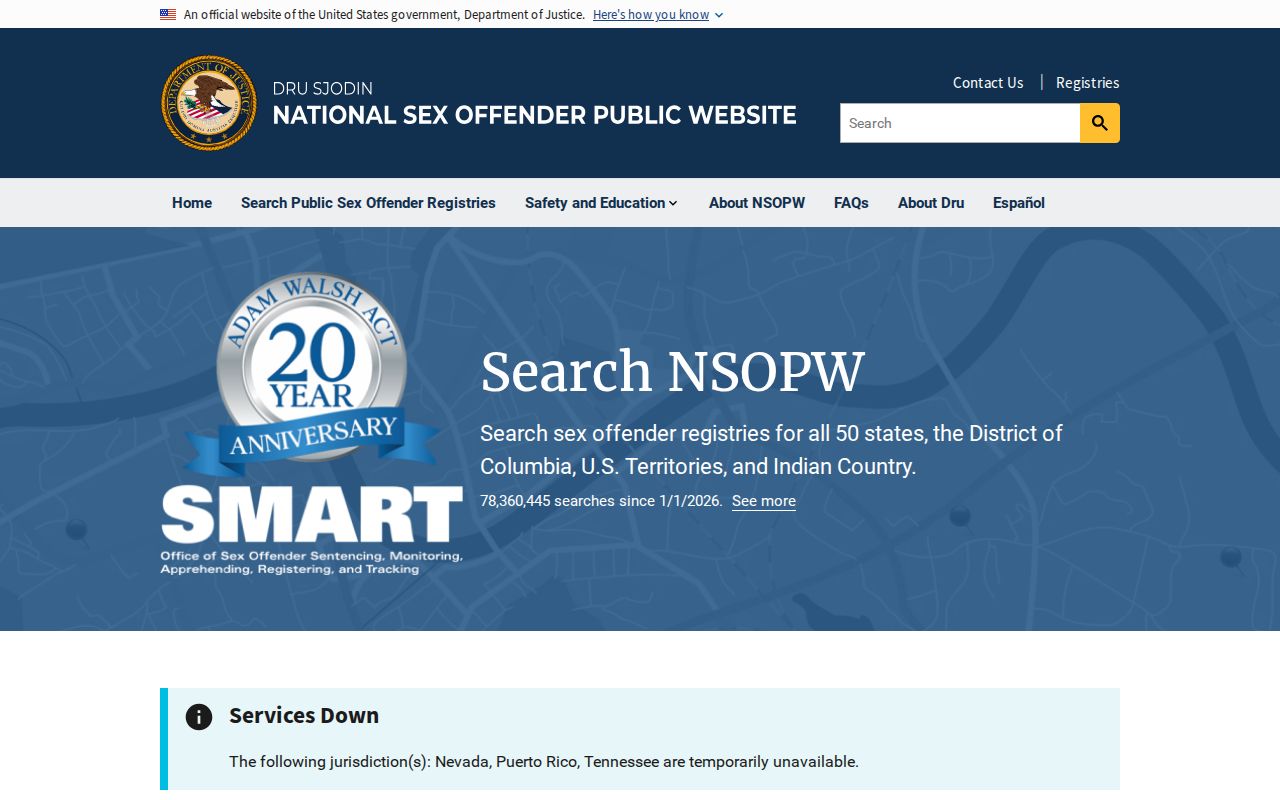
A record appearing through NSOPW remains subject to the source jurisdiction's terms and update cycle. For Fayette County questions, the ALEA entry and local law-enforcement contact provide the relevant Alabama context.
How to Search the Alabama Registry
The official ALEA Community Information Center leads to Sex Offender Search, safety and education material, forms, legal information, FAQs, and RSS feeds. Alabama Code §15-20A-8 requires search capability by name, city or town, county, ZIP code, or geographic radius. Exact radius choices were blocked during source inspection, so check the live control rather than relying on an assumed distance.
- Open the ALEA registry entry and review its use and safety notices.
- Search by first and last name, or choose Fayette County and another geographic field.
- Compare the result's photo, descriptors, aliases, and reported location to avoid a weak match.
- Open the profile, note its status and offense details, then report suspected errors to law enforcement.
| Field Label | Type | Required | Notes |
|---|---|---|---|
| Last Name | Text | No | Combine with first name to narrow common names. |
| First Name | Text | No | Partial or exact behavior is not explained publicly. |
| City / Town | Text or list | No | State-law required geographic field. |
| County | Dropdown | No | Select Fayette for countywide results. |
| ZIP Code | Text | No | Uses a five-digit geographic search. |
| Address / Radius | Address and radius | No | Live radius options should be verified. |
The ALEA registry entry shown here is the proper starting point because it places the search beside the state's legal and safety notices.
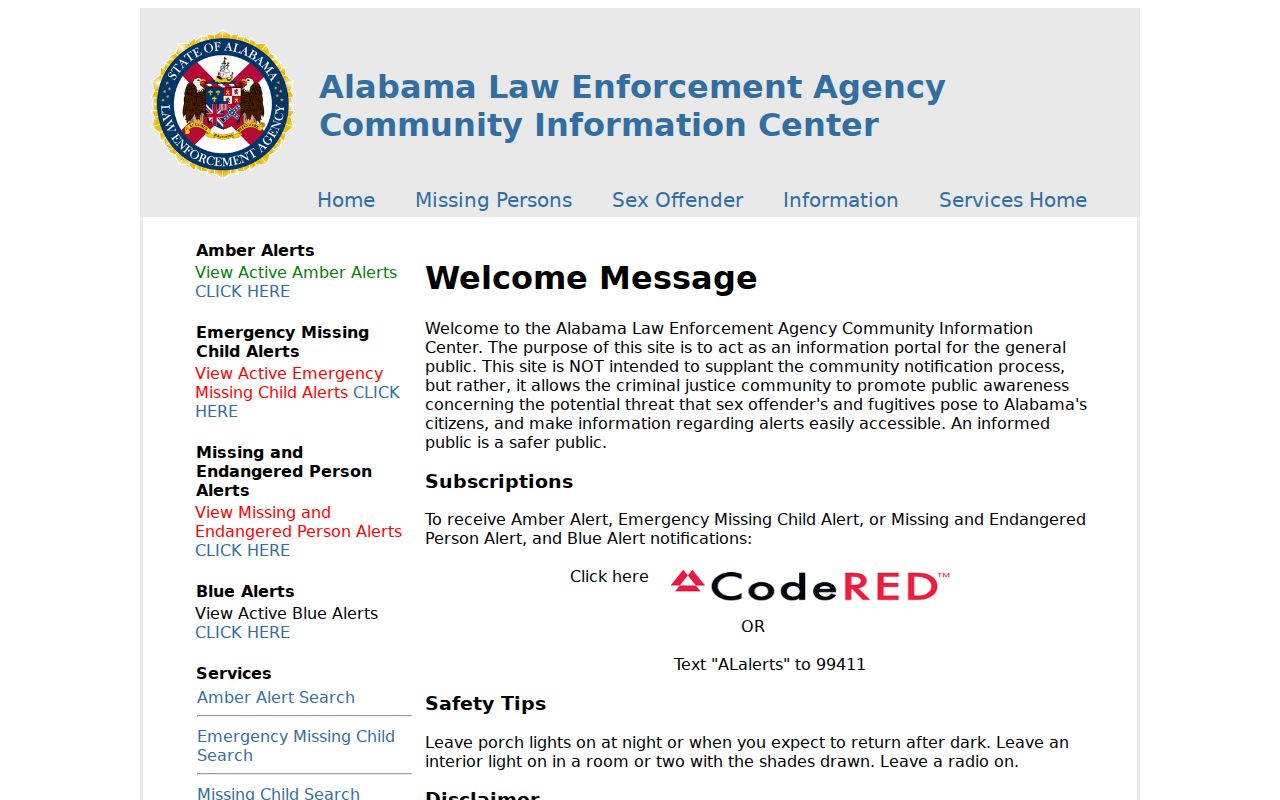
The screen is an entry point, not an independent local list. Fayette County information flows to the statewide system through the registration authority.
Report Fayette Registry Errors
If a Fayette County registry address appears wrong or a possible school or daycare proximity issue arises, contact law enforcement. Do not approach the listed person or anyone at the reported home or work location. The Fayette County Sheriff's Office can be reached at 205-932-3205 or visited at 113 1st Avenue NW, Fayette, AL 35555.
Inside an incorporated municipality, Alabama's local-law-enforcement definition includes both the county sheriff and the municipal police chief. Contact the agency tied to the reported location. The sheriff does not publish a separate registration-counter schedule, so call before going. ALEA's Sex Offender Registry Unit is also available at 334-676-7898 or sexoffenderunit@alea.gov.
Fayette County Sheriff's Office
113 1st Avenue NW
Fayette, AL 35555
205-932-3205
Call to ask where registration is completed or report suspected noncompliance.
Inside a Registry Profile
Alabama Code §§15-20A-7 and 15-20A-8 establish a broad registration data set. Public display is controlled by dissemination rules and safety redactions. A Fayette County profile may contain identity details, reported locations, status, and the offense basis for registration. Treat the address as self-reported and agency-verified information that may be awaiting an update.
| Name & Aliases | Current registered name and reported alternate names. |
|---|---|
| Photo & Description | Current photograph, sex, age or birth details, physical traits, scars, marks, or tattoos when public. |
| Reported Locations | Residential address and other reported locations when dissemination rules permit. |
| Offense Details | Qualifying offense, conviction place and date, and victim-age information when public. |
| Vehicles & Agency | Reported vehicles and the registering agency or jurisdiction. |
| Registration Status | Compliance or other status indicators supplied through the registry process. |
The ALEA registry FAQ pictured below explains which people may appear and why some categories are not publicly posted.
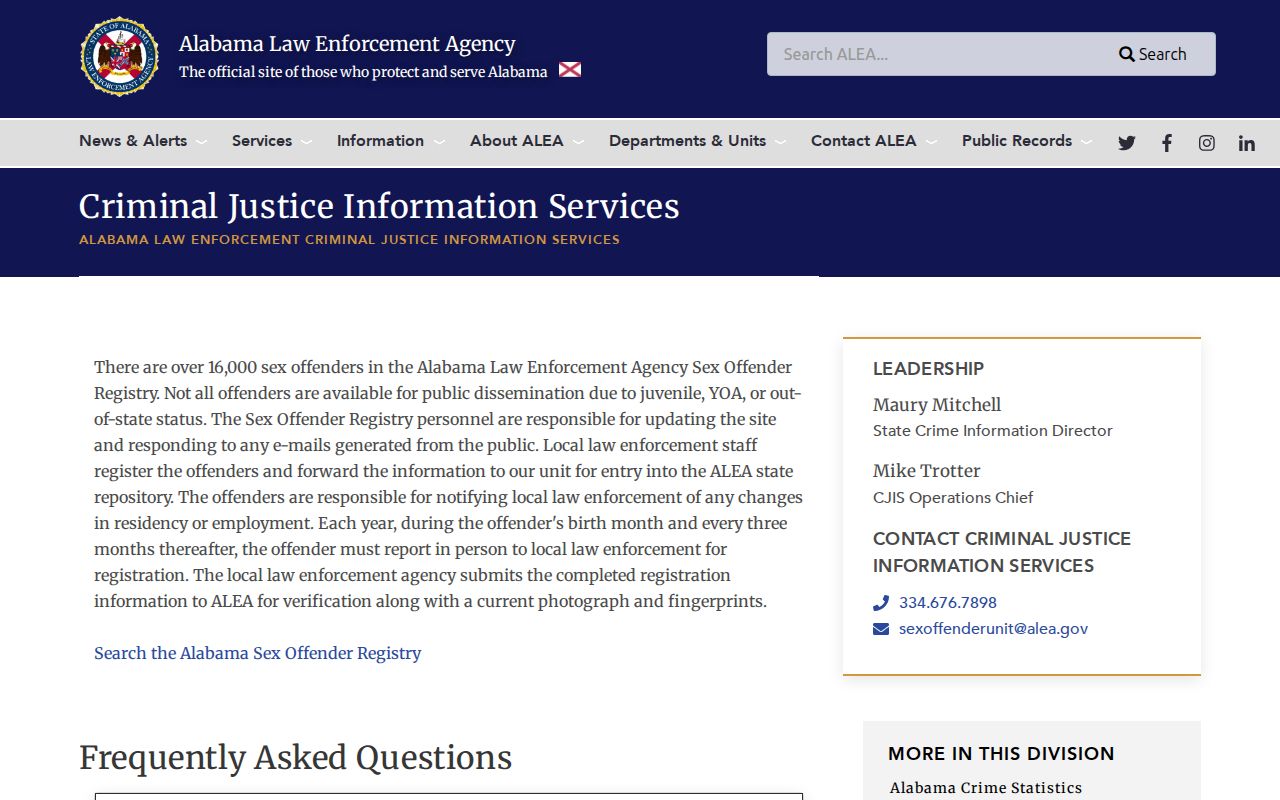
The FAQ is vital context. ALEA says a person is placed on the public site only after conviction and release through probation or the end of a sentence.
Fayette Registry Visibility Limits
Not every person in Alabama's registration system is publicly shown. Juvenile adjudication, Youthful Offender treatment, and some out-of-state situations follow different rules. A juvenile is ordinarily not posted unless assessed as high risk. ALEA says a youthful offender is ordinarily not posted unless the person was over 18 at the time of the offense.
A first conviction for indecent exposure or sexual misconduct is among the situations ALEA identifies as not appearing on the public site. Some out-of-state, federal, military, or tribal convictions may require an Alabama due-process hearing before posting. A blank Fayette County result therefore does not establish that no registration record exists.
The ALEA sex offender information source provides the state explanation captured below.
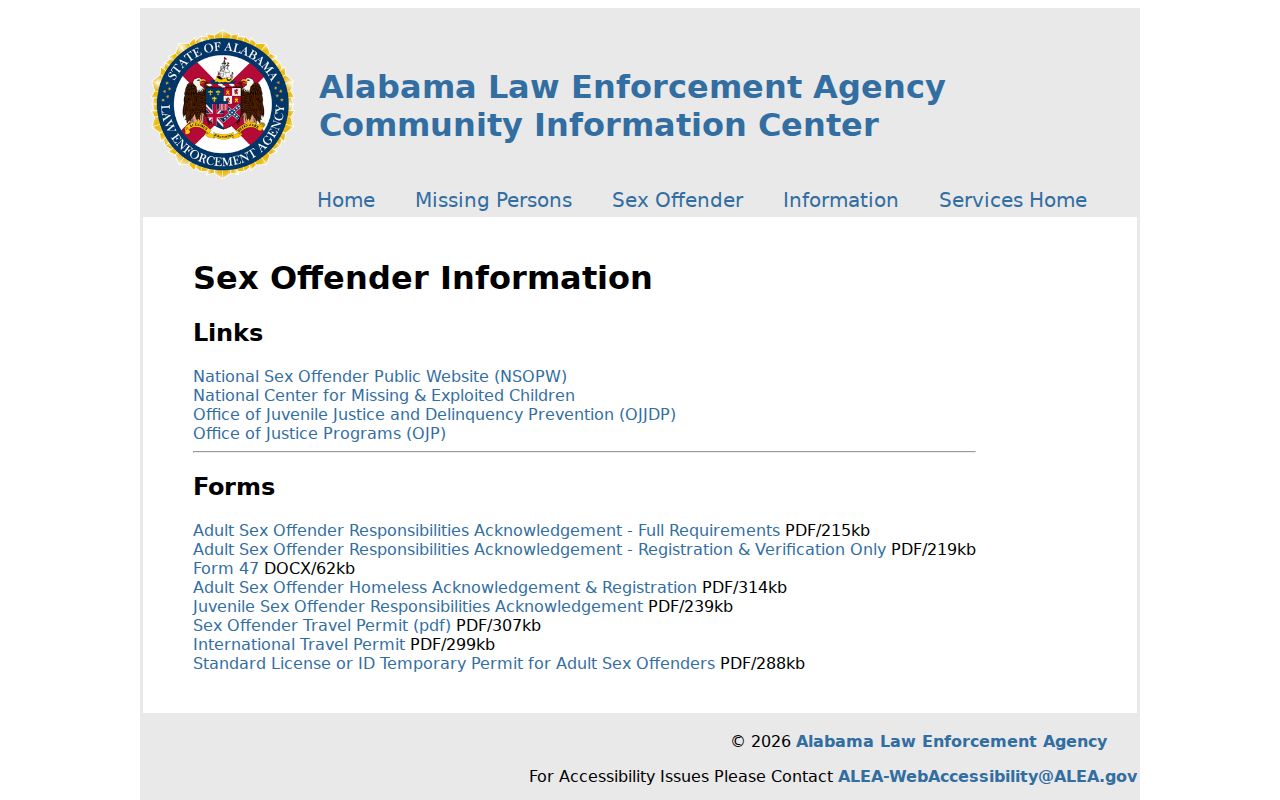
The distinction protects records that state law does not authorize for broad public display while keeping qualifying adult registry information available for community awareness.
Alabama Registration Levels and Requirements
Alabama does not use the federal Tier I, Tier II, and Tier III duration chart as its public shorthand. ASORCNA generally requires lifetime registration for an adult sex offender, with in-person verification during the birth month and every three months after that. A $10 fee is due to each registering agency at quarterly registration under §15-20A-22.
| Alabama Category | Public Visibility / Duration | Verification |
|---|---|---|
| Adult subject to ASORCNA | Generally lifetime registration and public posting when statutory rules are met. | Birth month and every three months thereafter. |
| Juvenile adjudication | Separate risk assessment; generally not public unless high risk. | Governed by separate juvenile rules. |
| Youthful offender | Limited posting; ALEA notes an age-over-18-at-offense exception. | Not represented as an adult tier schedule. |
| Certain outside convictions | Public posting may await an Alabama due-process decision. | Depends on the applicable Alabama determination. |
The official ASORCNA code source is shown below and should be checked for current language because amendments to §15-20A-5 take effect October 1, 2026.
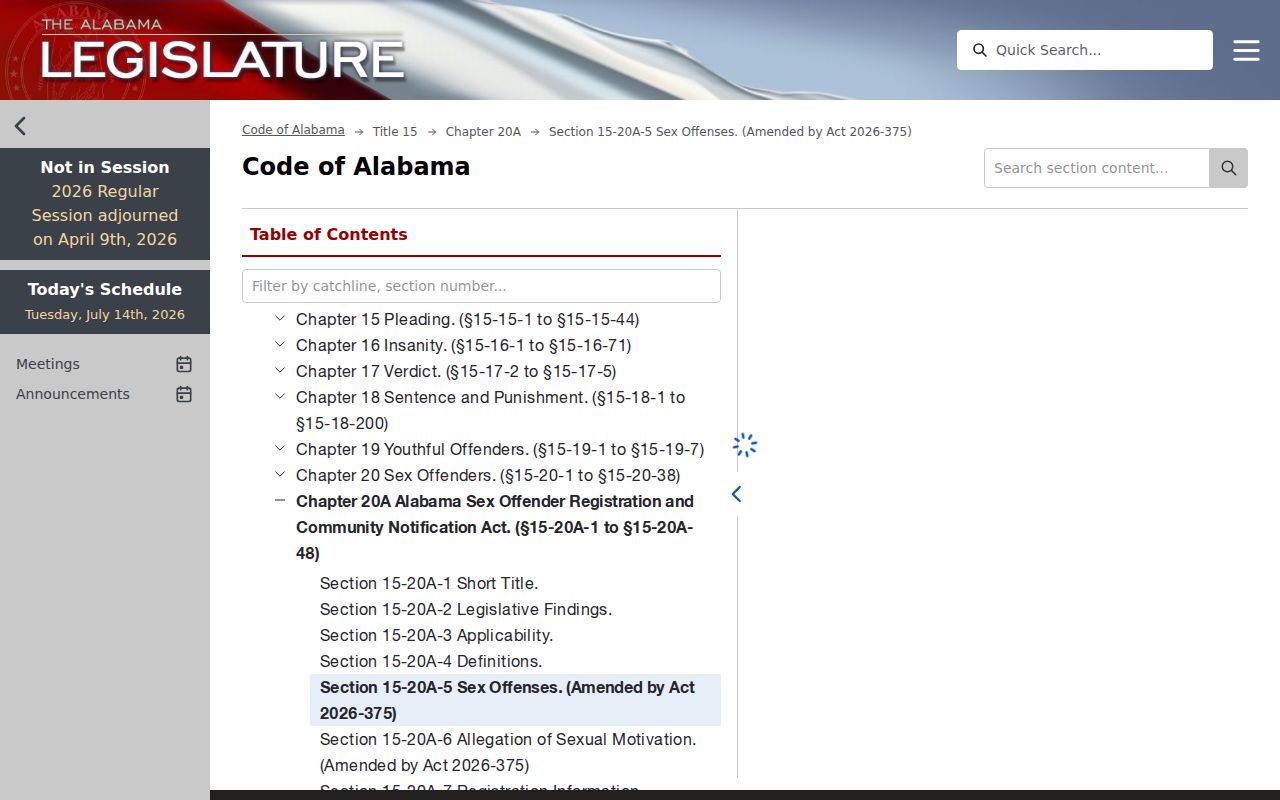
The statute image reinforces why a federal 15-year, 25-year, or lifetime tier chart must not be pasted onto a Fayette County search as Alabama law.
Quarterly Fayette Registration Cycle
Adult verification follows a birth-month cycle and repeats every three months. That schedule gives Fayette County law enforcement regular points to receive updated information, but the portal can still trail a move or a newly reported fact. A current search is a snapshot of the registry system at that time.
The registrant, not ALEA, has the first duty to report current information. Local staff collect the registration details and send them to ALEA for entry. This split explains why a suspected wrong address should go to the Fayette authority that can investigate it, rather than being treated as proof that the public database is knowingly false.
Fayette County residents should also distinguish registry verification from a new criminal case. Registration status can change through the reporting process without any new charge. If a separate prosecution occurs, the outcome belongs in the Fayette County criminal court case record.
Fayette County Proximity Rules
ALEA's FAQ says an adult convicted of an offense involving a child under 12 may not loiter on or within 500 feet of a school, childcare facility, playground, park, athletic field, or a business principally focused on caring for, educating, or entertaining minors. The FAQ distinguishes brief, necessary school or daycare pickup and drop-off from loitering.
Residence, work, and proximity limits are fact-specific. They can also change as statutes are amended. Use the current official Code chapter instead of applying one short summary to every Fayette County address. Report a suspected violation to local law enforcement with the location and facts that prompted the concern.
Community Notification and Lawful Use
The Fayette County sex offender registry serves public awareness and safety planning. It does not authorize harassment, threats, vigilantism, or crime against a listed person or anyone at a reported home or work location. Alabama Code §15-20A-8 requires the public registry warning and allows civil or criminal consequences for misuse.
Use registry information lawfully: Do not injure, harass, threaten, or commit a crime against a registrant or anyone at a reported location; report concerns to law enforcement.
Community notification supplements the online portal rather than replacing it. Search results can support calm planning and informed contact with the proper agency. They cannot prove a current threat, and they should never prompt direct confrontation. When a profile seems inaccurate, preserve the relevant details and give them to the Fayette County Sheriff's Office, the appropriate municipal police chief, or ALEA's registry unit.